
Married to Someone Who Never Takes Correction? The Silent Relationship Killer
- Wilbert Frank Chaniwa
- Apr 21
- 5 min read

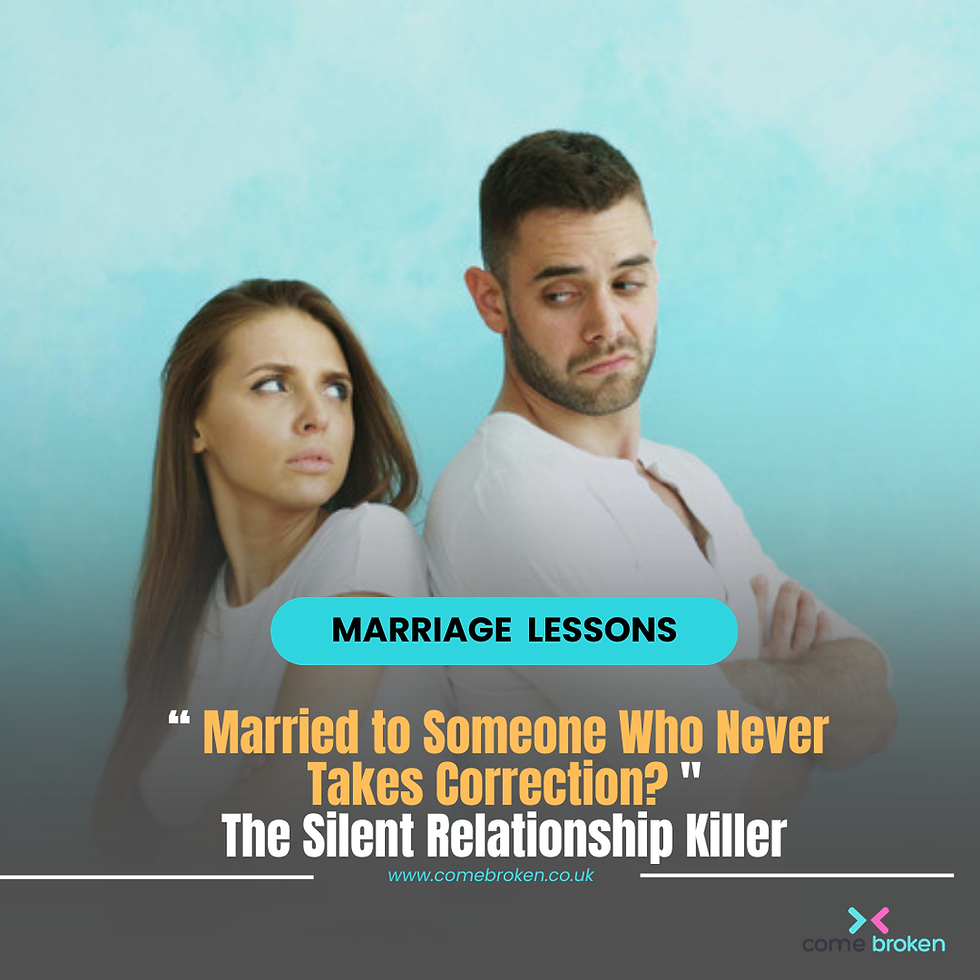
Marriage is not sustained by love alone. It is sustained by humility, growth, repentance, communication, and the willingness to be corrected.
One of the most emotionally exhausting marriages is not always one filled with shouting, cheating, or dramatic betrayal. Sometimes the deepest pain comes from being married to someone who never listens, never reflects, never changes, and never takes accountability.
You bring concerns. They dismiss them.
You explain hurt. They reverse it onto you.
You ask for change. They get defensive.
You pray for peace. Nothing shifts.
Over time, this dynamic can create loneliness inside marriage that feels heavier than being alone.
This issue affects men and women alike. Some wives feel unheard by stubborn husbands. Some husbands feel trapped with wives who reject all responsibility. The gender matters less than the pattern.
The real issue is this:
What happens when one spouse refuses correction?
Why This Is So Dangerous in Marriage
No human being enters marriage perfect. Every spouse has flaws, blind spots, habits, wounds, and immaturity.
Healthy marriages survive because both people are willing to say:
“I was wrong.”
“I need to work on that.”
“Thank you for telling me.”
“Help me understand.”
“I’ll do better.”
When one spouse refuses correction, growth stops.
And where growth stops, resentment grows.
A marriage can survive mistakes.
It struggles to survive pride.
Psychological Roots of a Spouse Who Rejects Correction
Many people assume a spouse who never listens is simply arrogant. Sometimes that is true. But often the roots are deeper.
1. Fragile Ego Hidden by Defensiveness
Some people cannot hear feedback because criticism feels like personal destruction.
Instead of hearing:
“You hurt me.”
They hear:
“You are worthless.”
So they defend themselves aggressively.
2. Childhood Conditioning
If someone grew up in a home where mistakes were punished harshly, correction may trigger fear, shame, or rage.
They learned:
mistakes = rejection
feedback = attack
vulnerability = danger
3. Narcissistic Tendencies
Some spouses consistently avoid accountability because they believe they are superior, entitled, or always right.
They may minimize your feelings and preserve their image at all costs.
4. Emotional Immaturity
Some adults simply never learned conflict skills.
They shut down, blame shift, sulk, stonewall, or deny because they lack emotional tools.
5. Control Issues
For some people, admitting wrong feels like losing power.
So they resist correction to maintain dominance.
Signs You Married Someone Who Does Not Take Correction
1. Every Conversation Turns Into Your Fault
You mention their behavior. Suddenly you are on trial.
2. They Get Instantly Defensive
Even gentle feedback causes anger, sarcasm, or withdrawal.
3. They Rarely Apologize
And if they do, it sounds like:
“Sorry you feel that way.”
“Sorry but you made me do it.”
“Sorry, can we move on now?”
4. Repeated Behaviors Never Change
You discuss the same issue for years.
5. They Rewrite History
They deny what happened or claim you are exaggerating.
6. They Punish Honesty
When you speak truth, they become cold, hostile, or distant.
7. They Need to Win, Not Resolve
Conflict becomes about being right rather than healing.
How This Affects the Other Spouse
Living with a person who rejects accountability often creates silent emotional damage.
Emotional Exhaustion
You get tired of repeating yourself.
Walking on Eggshells
You stop bringing concerns to avoid conflict.
Self-Doubt
You begin wondering if you are the problem.
Resentment
Love weakens when pain is continually ignored.
Loneliness
You may be married but emotionally abandoned.
Anxiety and Depression
Chronic unresolved conflict affects mental health.
Pride vs Wisdom
Scripture repeatedly warns about the danger of refusing correction.
Proverbs teaches that wise people welcome rebuke, while fools reject it.
Proverbs 12:1 says that loving correction is linked to wisdom.
Proverbs 15:31-32 teaches that those who listen to life-giving correction gain understanding.
Proverbs 16:18 warns that pride goes before destruction.
This does not mean perfection is required. It means teachability matters.
A spouse who can repent can grow.
A spouse ruled by pride damages everything around them.
In the New Testament, James teaches believers to be:
quick to listen
slow to speak
slow to anger
That alone would transform many marriages.
Important Truth: Correction Must Also Be Given Wisely
Some spouses reject “correction” because what they receive is actually contempt, nagging, insults, public embarrassment, or constant criticism.
Truth delivered with disrespect often produces resistance.
So ask honestly:
Am I speaking calmly?
Am I attacking character or addressing behavior?
Am I correcting to help or to control?
Is my tone loving?
Truth matters. Tone matters too.
Solutions: What To Do If Your Spouse Never Takes Accountability
1. Stop Repeating Yourself Emotionally
Endless pleading often loses power.
Speak clearly, calmly, specifically.
Instead of:
“You never care!”
Say:
“When you dismiss me during arguments, I feel unheard and disconnected.”
2. Use Boundaries, Not Begging
You cannot force growth.
But you can set boundaries.
Examples:
“I will discuss this when we can both be respectful.”
“I won’t stay in conversations where I’m insulted.”
“If this continues, we need counseling.”
3. Address Patterns, Not Isolated Incidents
Show recurring cycles rather than one event.
People dismiss moments easier than patterns.
4. Invite Counseling
A neutral third party can expose dynamics both spouses miss.
Marriage counseling can be powerful when both are willing.
5. Protect Your Mental Health
You may need:
individual therapy
support from trusted mentors
journaling
prayer
emotional distance from chaos
6. Watch Actions, Not Promises
Many resistant spouses promise change after conflict.
Real repentance shows in consistent behavior.
7. Know When It Becomes Emotional Abuse
If denial, blame-shifting, gaslighting, intimidation, contempt, or chronic manipulation are severe and ongoing, this may go beyond immaturity into abuse.
That requires stronger intervention and support.
If You Are the Spouse Who Struggles With Correction
Be honest.
Do you interrupt feedback?
Defend instantly?
Counterattack?
Minimize pain?
Apologize without change?
If yes, your marriage may not need a better spouse—it may need a humbler you.
The strongest people are not those who avoid correction.
They are those who can hear truth without collapsing.
Can This Marriage Heal?
Yes—if there is humility.
Many marriages recover when one spouse finally says:
“I see the pattern.”
“You’ve been carrying pain.”
“I need help.”
“I was wrong.”
But if pride remains entrenched, healing becomes difficult.
Marriage cannot thrive where one person must always be right.
Ephesians teaches believers to speak truth in love.
That means:
truth without cruelty
love without enabling
grace without denial
accountability without hatred
Healthy marriage needs both truth and humility.
Without them, love suffocates.
If you are married to someone who never takes correction, stop assuming this is “just how marriage is.”
It is a serious relational issue.
Some marriages need better communication.
Some need counseling.
Some need boundaries.
Some need repentance.
Some need wisdom to discern the difference.
Because the spouse who refuses accountability often asks everyone else to carry the weight of their pride.
Will & Efe Chaniwa
Co Founders - Come Broken
Rooted in Christ Ministries



Comments